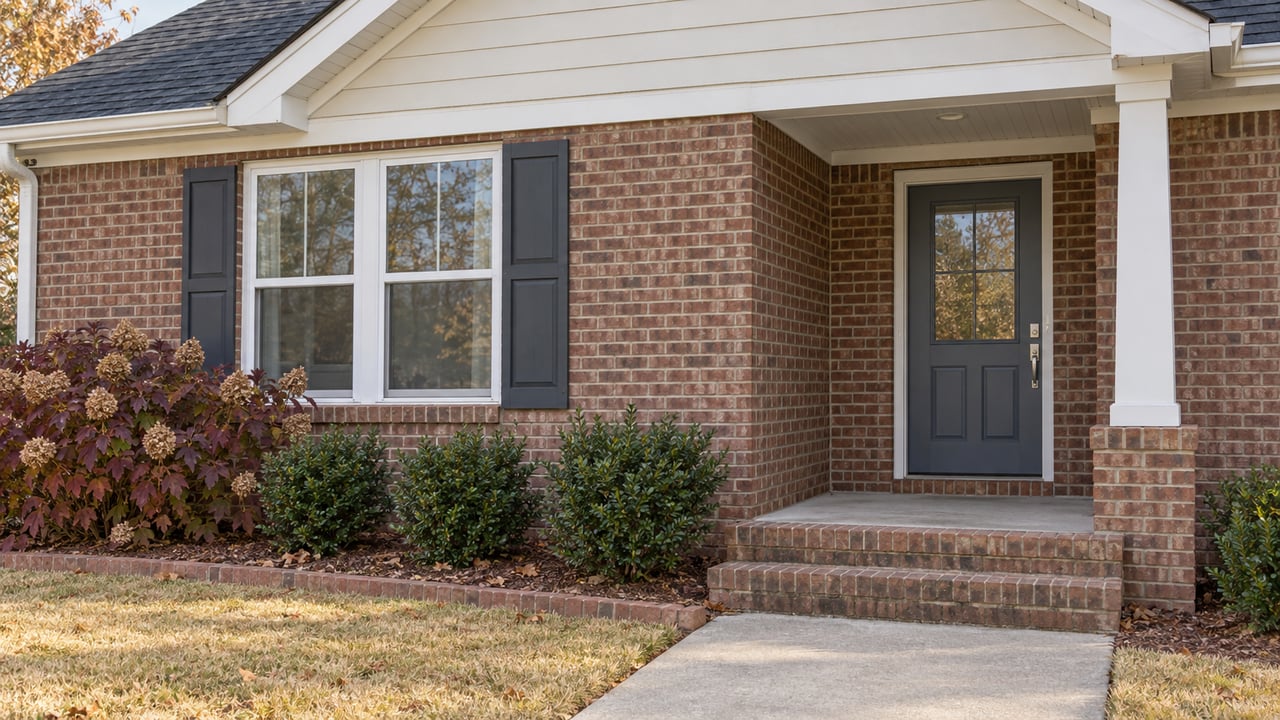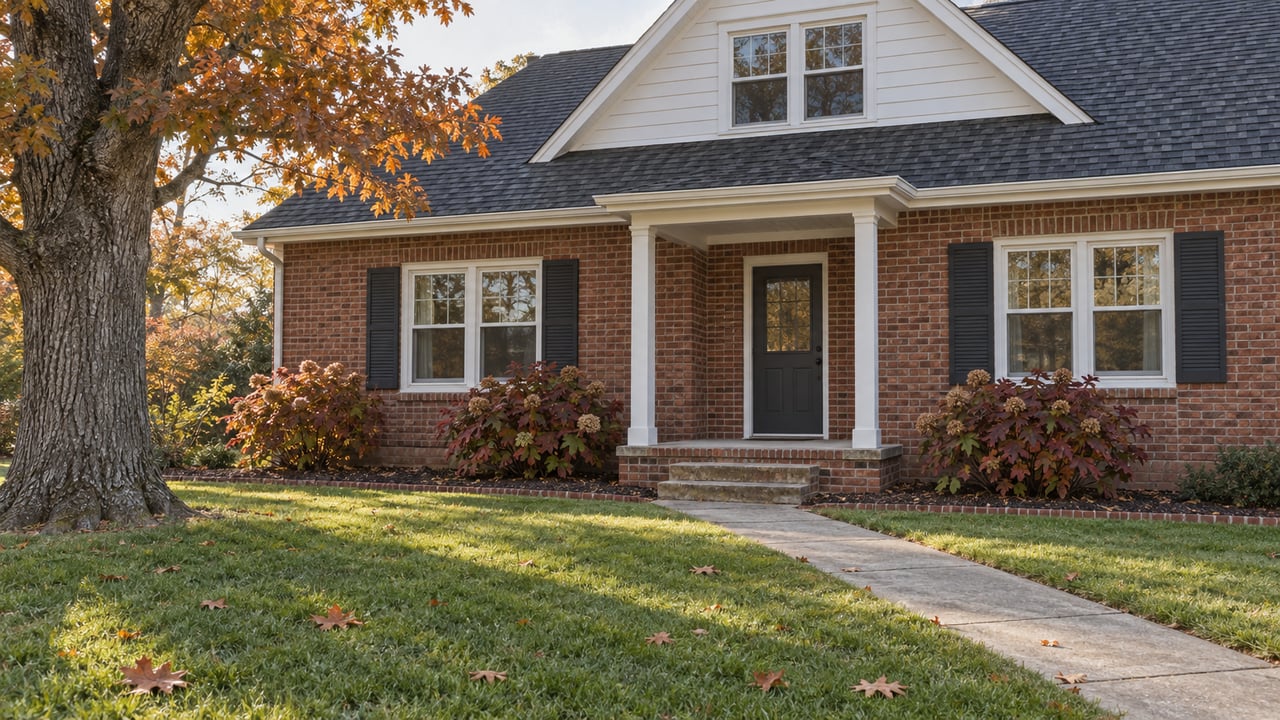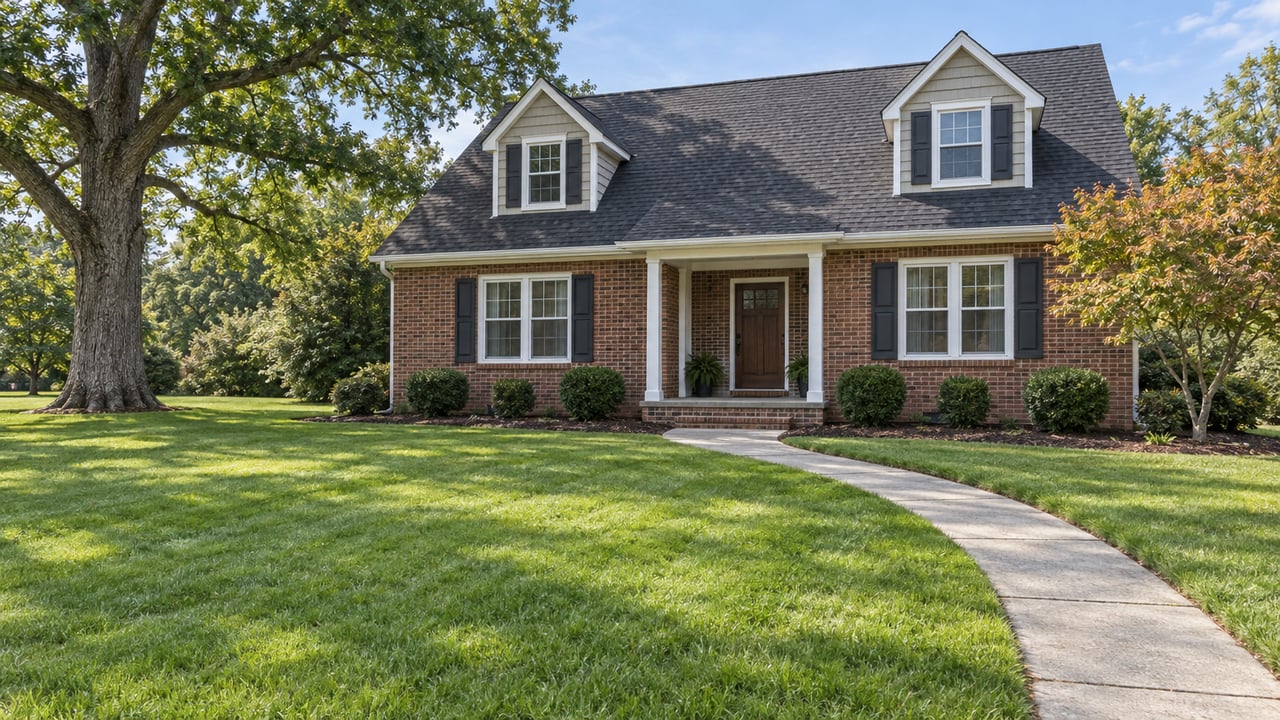
Two houses on Avondale Drive in North Main went on the market in February 2025. Hurricane Helene had damaged both of them the year before. By the account Greenville Journal reported in July, the properties at 240 E. Avondale Drive and 107 N. Avondale Drive sat for several months before a Greenville real estate firm, The Gallo Co., made an offer. It closed on the parcels in January.
To a family shopping for one house, those were two tired homes on a lot of land. To a builder, they were 1.4 acres with 330 feet of street frontage in a zoning district that allows 40-foot lots. Math like that decides what happens to a street once a property changes hands. On September 28, 2026, Greenville City Council decided 4-3 to leave that math alone.
So if you're buying in one of Greenville's established in-town neighborhoods, you're buying more than the house. You're buying the lot pattern of the street around it, and the code doesn't lock that pattern in place.
The Rule Protects the Minimum, Not the Street
When the city's planning staff walked council through the Greenville Development Code changes at an August 10 work session, they described the current rule this way. A new subdivision lot only has to meet the dimensional standards of its zoning district. It can't be narrower than the district minimum, and that's the whole test. Greenville Journal's August coverage quoted Deputy Planning Director Michael Frixen saying some past subdivisions met the zoning requirements but didn't fit the lot sizes around them.
Avondale Drive shows how wide that gap can get. Both parcels are zoned House C District, or RH-C, which allows lots as narrow as 40 feet. City Councilmember John DeWorken lives in North Main and represents it. He pointed out that the neighborhood's average lot width is 79 feet. At 40 feet, 330 feet of frontage holds about eight homes by right.
The Gallo Co. proposed seven. Each home would be about 3,500 square feet, multi-story, with perhaps four bedrooms and an attached garage. All seven would share one driveway. The Post and Courier reported that each would be priced over $1 million.
Why the Number Was Seven
According to Greenville Journal, Anthony Gallo said seven homes was the most financially workable number to cover the fixed cost of the site work.
"What we do know is that seven homes financially models out enough to take on the risk of the project."
That's Anthony Gallo, quoted by Greenville Journal after neighbors spoke to council on July 13.
Here's the mechanism. Clearing, grading, utilities and a shared drive cost roughly the same whether four homes go on top of them or seven. Every lot you take away puts a bigger slice of that fixed cost on the lots that are left. That's why the allowed lot width ends up setting how many homes get built. It also helps explain why a large, damaged property can sit unsold to single-home buyers and then make sense to someone who can divide it.
Neighbors organized as "One Community One Voice." The Post and Courier reported that more than 800 people signed a petition. Residents raised traffic, tree loss and stormwater, and said four homes would fit the area. In September, the Gallos told the Post and Courier they were working on a revised plan with fewer homes but didn't yet know the new number. That September report is the latest public update we found on the project.
What the Rejected Rule Would Have Changed
City staff wrote a fix. In August it was a 66% formula. By the September vote it had become 70%. Greenville Journal's September 29 council recap lays out how it would have worked in the House A, House B and House C districts.
| Current code | Proposal rejected Sept. 28, 2026 | |
|---|---|---|
| Minimum new lot width | Zoning district minimum (40 ft in RH-C) | At least 70% of the surrounding parcels' average width |
| Which neighbors count | None | Two parcels on each side, plus the three directly across the street |
| Floor | District minimum | No narrower than the narrowest surrounding lot or the district minimum |
| Outliers | N/A | Surrounding parcels 200% or more of the average would be left out of the math |
| Exempt | N/A | Parcels of more than 3 acres |
Here's a rough run of the numbers for Avondale. Say the surrounding parcels matched the 79-foot neighborhood average Greenville Journal reported. Seventy percent of 79 is about 55 feet, and 330 feet of frontage divides into five lots at that width. Back in August, while staff were still testing the earlier 66% draft, City Manager Shannon Lavrin told council that formula would have given the Avondale project fewer lots.
Citywide, the effect would have been smaller in raw numbers but meaningful as a share. According to the Post and Courier, staff reviewed the past year of subdivisions. Among the ones the rule would have covered, roughly 10 lots, about a third of the total, would have been eliminated.
Same Rule, Opposite Effect
The Post and Courier described a debate of more than an hour, with much of the split falling along neighborhood lines. DeWorken was the strongest supporter. He said his constituents' top concern is growth, meaning traffic, trees giving way to concrete, and older homes coming down for large new projects.
Councilmember Ken Gibson represents the area around Nicholtown, and he made the opposing case in the Post and Courier's account:
"I don't dispute that this is probably a great plan for Avondale. … But to take this and use it as a blanket restriction on everywhere in the city is not looking out for the people in my neighborhood."
Gibson and Councilmember Lillian Brock Flemming said people in their districts want more housing options. As prices rise, they said, smaller homes on narrow lots, duplexes and townhomes are how some buyers stay in the area they grew up in. In the same Post and Courier story, a Hampton-Pinckney resident who lives in a duplex described large historic homes sitting next to small modern ones on his street. He said the rule would stop that kind of mix from happening again.
The rule wouldn't have meant the same thing everywhere. On a North Main street of 79-foot lots, it would have held new lots close to the existing pattern. Where narrow lots are the cheaper way to own a home, it would have shut that path for future projects. Mayor Knox White, Gibson, Tina Belge and Flemming voted no. DeWorken, Dorothy Dowe and Wil Brasington voted yes.
How a Split Actually Gets Approved
This is the transaction-side detail. The Avondale plan followed the path a lot split takes in the city:
- Project preview meeting. The Gallo Co. presented at the city's project preview meeting in March. That meeting was required before staff could approve its minor subdivision application. The firm voluntarily went back to a second preview on August 25.
- Staff decision. A minor subdivision is approved administratively, not by council vote.
- Appeal route. The city's 36-month review draft says administrative decisions on minor subdivisions can be appealed to the Planning Commission.
Even under the proposed rule, the Greenville Journal reported, subdivisions the city had already approved would have been considered vested. Any new version of a lot-width rule now has to go back through the Greenville Planning Commission, which the Post and Courier called a months-long process. Council members who voted no said they're open to a narrower fix.
Reading a Street Before You Make an Offer
For an in-town buyer, the useful question is how much bigger the nearby lots are than their zoning requires, along with what the house itself is worth. A street of wide lots in a 40-foot district has room to change. A street already built close to its minimum doesn't.
The city's Address and City Services Search lets you look up an address or parcel and turn on zoning and parcel layers. The map comes with a disclaimer that the data isn't guaranteed to be accurate or current. The city also posts agendas on its Project Preview Meetings page, where proposals like the Avondale plan first show up in public.
Quick Answers
Did Greenville pass a lot-width limit? No. Council split the infill lot-width amendment out of the 36-month code review and defeated it 4-3 on September 28, 2026. The other amendments passed first reading.
Which zoning districts were involved? House A, House B and House C (RH-A, RH-B and RH-C). The 40-foot minimum width reported for the Avondale parcels applies to RH-C.
Is the Avondale Drive project final? Not as of the September reporting. The developers said they were revising to fewer homes, with the number still to be decided.
How long has the current code been in effect? The Greenville Development Code took effect in July 2023, and staff have updated it five times since.
If you're weighing an in-town Greenville home, or own one on a wide lot and want to know what the land itself might be worth, Upstate Home Source can help you look at the house, the parcel and the street around it together. Start with Get Your Instant Home Valuation, and Micha will help you work out what the zoning and the neighboring lots mean for your price.
This article is general information, not legal, tax or financial advice. Consult a qualified professional about your situation.